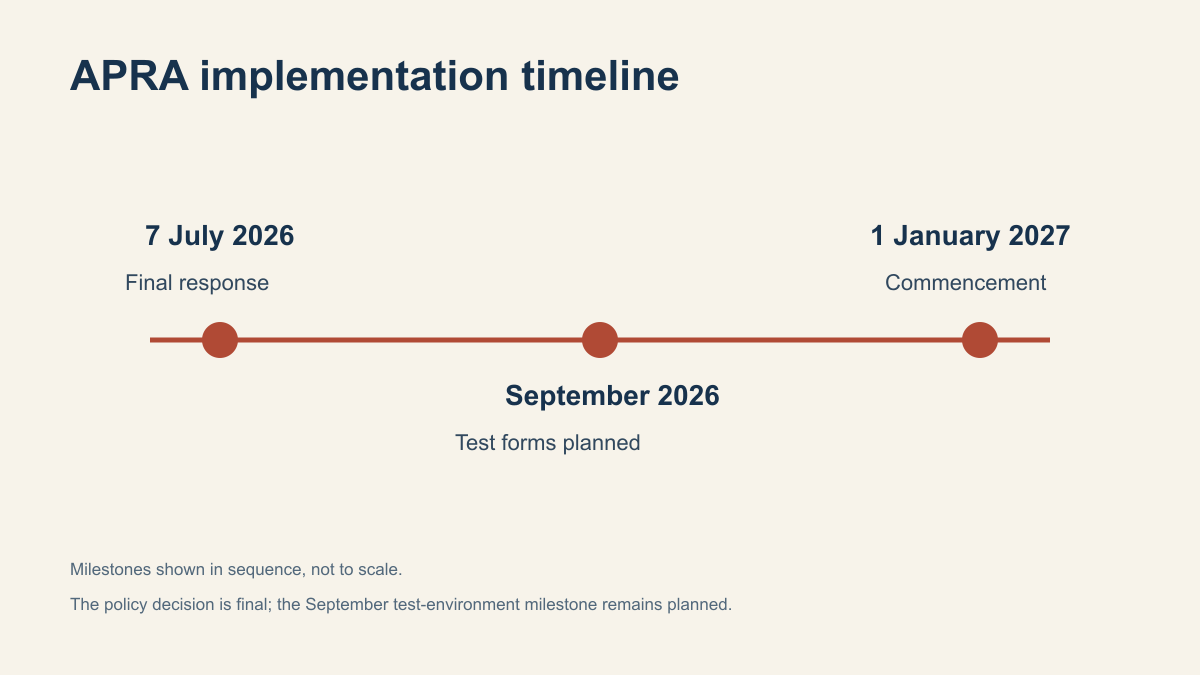
Australia’s prudential regulator has finalised targeted changes to the general-insurance and reinsurance framework, with the revised prudential and reporting standards due to take effect on 1 January 2027.
The Australian Prudential Regulation Authority published its final response on 7 July 2026. The package updates GPS 115, GPS 116 and GPS 230, makes a consequential change to CPS 320, and revises associated reporting standards and guidance.
The changes are targeted, not a wholesale redesign
APRA’s work is intended to facilitate reinsurance, including alternative forms of risk transfer, while retaining prudential controls. The final package addresses the capital treatment of certain reinsurance arrangements, the treatment of reinstatements and the approval pathway for some arrangements.
Among the consultation’s targeted issues were use of a net whole-of-portfolio approach for certain single-peril arrangements, removing a reinstatement requirement where a reinstatement is not available—such as for some catastrophe bonds—and allowing the Appointed Actuary a role in approving some less complex arrangements. More complex cases remain subject to APRA oversight.
Those framework changes do not establish the capital or earnings effect for any insurer. The outcome for a firm depends on its programme, contracts, exposures and supervisory treatment.
Implementation timetable
The final standards are scheduled to take effect on 1 January 2027. APRA says updated reporting forms are planned for the APRA Connect test environment in September 2026, giving firms a technical checkpoint before commencement.
The decision is final at the policy level, but implementation work remains. Insurers and reinsurers will need to map the final wording to their own arrangements, data and approval responsibilities rather than relying on the earlier proposal.
Sources and methodology
This report uses APRA’s final consultation-response page and distinguishes the final decision from its implementation dates. Examples from the proposal are included only where they explain the targeted scope and are not presented as firm-level outcomes.